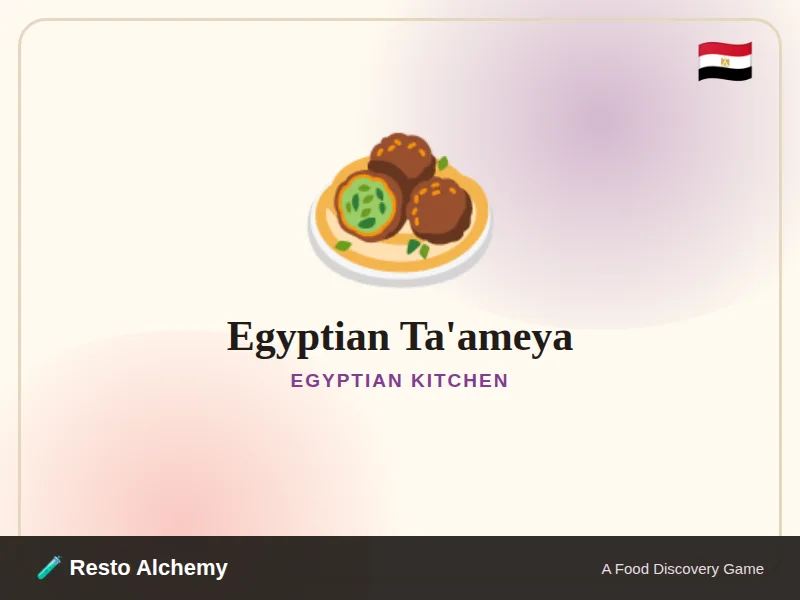
Egyptian Ta'ameya
Fava-bean fritters crusted with sesame seeds and fried until crisp.
History & cultural context
📝 This cultural/historical write-up is newly researched and pending manual review — treat it as a helpful draft rather than confirmed, final text.
Ta'ameya is Egypt's own style of fried bean fritter, distinguished from the chickpea-based falafel eaten elsewhere in the region by its use of fava beans and fresh herbs. Food historians generally trace fried-bean street food to Egypt, with some accounts suggesting Coptic Christian communities popularized it as a meat-free option during religious fasting periods, though the exact timeline is not firmly documented. Ta'ameya and falafel are often discussed together given their shared format, and which came first is genuinely debated among food historians rather than settled; this entry treats ta'ameya as Egypt's distinct regional version rather than claiming it invented the wider fried-fritter format.
General ingredients
A high-level look at what goes into Egyptian Ta'ameya — the exact order and combinations are the puzzle you solve in the game itself, so they're deliberately not listed here.